Jontay Porter Lifetime Ban: How Prop Bet Manipulation Cost Him His Career
 Available in US
The text message came through my phone in early 2024: “Check the betting lines on Porter’s props tonight. Something’s wrong.” Within hours, what had looked like anomalous market movement would become the fastest integrity investigation in modern NBA history. Jontay Porter, a journeyman centre on a two-way contract with the Toronto Raptors, was about to become the most important figure in sports betting regulation since Tim Donaghy.
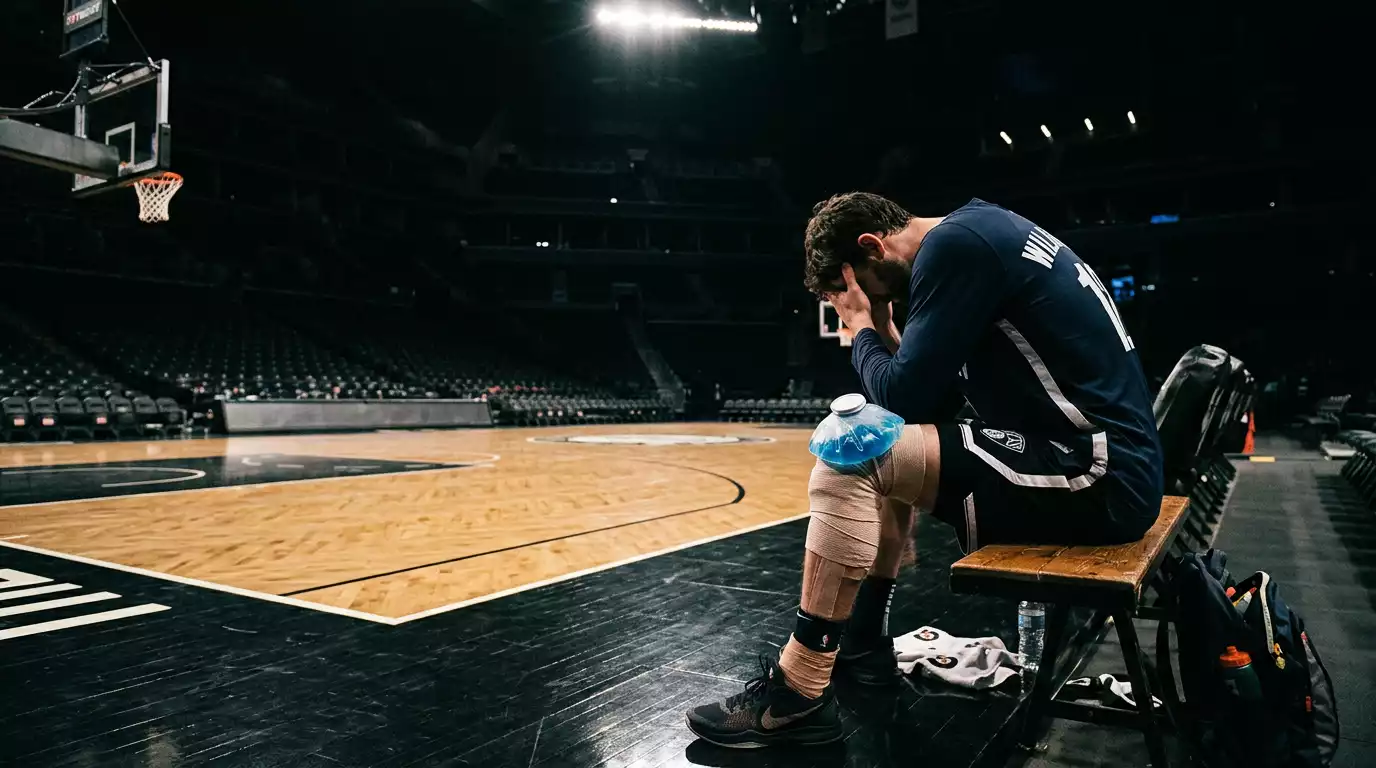
Porter’s scheme was audacious in its simplicity and stupid in its execution. He manipulated his own playing time to cash in on prop bet “unders,” exiting games early with phantom injuries while associates collected winnings. The scheme worked precisely twice before the NBA detected it, investigated it, and handed down a lifetime ban that sent shockwaves through professional sports.
The Scheme That Couldn’t Stay Hidden
Porter’s plan relied on a fundamental feature of player prop bets: they’re tied to individual performance rather than game outcomes. If a sportsbook offers a line on “Jontay Porter over/under 3.5 rebounds,” bettors are wagering on whether he’ll grab four or more rebounds versus three or fewer. For a player, influencing this market is trivially easy. Don’t play, and you guarantee the under hits.
The first suspicious game occurred in January 2024. Porter was listed as healthy, played briefly, then left citing illness. Sharp bettors had hammered his unders in the hours before tip-off. Sportsbooks noticed immediately; unusual betting patterns on low-profile players trip automated alerts. But one anomalous game wasn’t enough to prove manipulation. It could have been coincidence.
Then Porter did it again. Same pattern. Healthy start, early exit, unders cashing. The betting activity was even more concentrated, the amounts larger. This time the sportsbooks didn’t just flag the activity internally. They contacted the NBA and Ontario gaming regulators, who had recently launched comprehensive sports betting markets.
The speed of detection highlighted how much monitoring infrastructure has evolved since Donaghy. In the early 2000s, suspicious betting might take weeks or months to identify. Now sportsbooks share information in near real-time, and integrity monitoring services analyse betting flows continuously. Porter’s window of opportunity closed before he could make a third attempt.
How the NBA Detected the Manipulation
The investigation that followed combined multiple data streams. Sportsbook betting records showed concentrated activity on Porter’s props from accounts that had previously shown no interest in obscure player markets. The timing of bets correlated with Porter’s access to injury information. Financial analysis revealed connections between betting accounts and individuals with ties to Porter.
What made the case straightforward to build was Porter’s complete lack of operational security. The betting accounts weren’t sophisticated. The communication with associates wasn’t encrypted. The pattern of exiting games was blatant enough that casual observers began questioning it on social media before the formal investigation concluded.
I’ve spoken with integrity officers who worked on similar cases, and Porter’s scheme violated every principle of plausible deniability. A sophisticated manipulator varies their approach, creates cover stories, ensures betting activity is dispersed across multiple jurisdictions and platforms. Porter basically drew a diagram showing exactly what he was doing and handed it to investigators.
The Lifetime Ban and Its Significance
Commissioner Adam Silver announced Porter’s permanent ban in April 2024, less than three months after the first suspicious game. The speed was intentional. The NBA wanted to demonstrate that integrity violations would be detected quickly and punished severely.
A lifetime ban is the nuclear option in professional sports discipline. It doesn’t expire. It can’t be appealed through normal grievance procedures. It removes not just the opportunity to play but any association with the league. Porter cannot coach, cannot work in basketball operations, cannot be employed by any NBA franchise in any capacity.
The punishment was designed to deter future manipulation as much as to penalise Porter himself. Silver’s public statements emphasised that the league would rather lose a player than have its integrity questioned. The message to anyone contemplating similar schemes was explicit: the consequences are career-ending.
Industry-Wide Changes After Porter
The Porter scandal triggered immediate reforms across sports betting markets. Major sportsbooks agreed to stop offering player prop bets on athletes with two-way contracts or 10-day deals, recognising that these fringe players had the most to gain and least to lose from manipulation. The rule change eliminated what had been an obvious vulnerability.
Regulators in multiple jurisdictions increased information-sharing protocols, ensuring that suspicious activity detected in one market would be flagged across all licensed platforms. The Ontario gaming authority, which had been closely monitoring the new Canadian betting market, used the Porter case as a model for how swift regulatory response should work.
Within the NBA itself, player education programmes were enhanced. Porter had apparently not understood how sophisticated modern betting surveillance had become. Updated training now explicitly addresses detection capabilities, ensuring players know that manipulation attempts will be caught.
The broader lesson was that prop bets on individual players create integrity risks that traditional game outcome bets don’t. When a single person can unilaterally determine whether a bet wins or loses, the incentive for corruption is maximised. The industry hasn’t stopped offering player props, but it’s become more cautious about which players and which markets carry acceptable risk.
Implications for UK Bettors
The Porter case matters to UK punters because it demonstrates both the vulnerabilities and the safeguards in modern betting markets. Player props on NBA games remain available through UK-licensed operators, and the same detection systems that caught Porter operate across regulated markets globally.
From a betting perspective, the Porter incident suggests that unusual line movements on obscure player props should prompt caution. When sportsbooks suddenly move lines on low-profile players without obvious news driving the change, something may be happening that public bettors don’t know about. The smart money is moving for a reason, and that reason might involve information you can’t access.
The lifetime ban also reinforces that the NBA takes integrity seriously enough to sacrifice players over it. That’s reassuring for bettors worried about game-level manipulation. But the Porter case also showed how quickly a determined individual can affect betting outcomes before detection catches up. The window of opportunity exists; it’s just narrow and closing.
What Porter ultimately demonstrated is that prop bet markets remain the soft underbelly of sports integrity. Main game lines are harder to manipulate because they require coordination among multiple people. Player props can be fixed by one person making decisions about their own performance. Until that fundamental asymmetry is addressed, prop bet markets will carry risks that game outcome markets don’t.
Why was Jontay Porter banned for life from the NBA?
Porter was banned for manipulating his own playing time to fix prop bets. He exited games early with phantom injuries while associates bet on his statistical ‘unders,’ creating a guaranteed outcome for those wagers.
How did sportsbooks detect the Jontay Porter manipulation?
Automated monitoring systems flagged unusual betting patterns on Porter’s props before games, showing concentrated activity from accounts with no previous interest in obscure player markets. The timing and amounts triggered integrity alerts that led to formal investigation.
What rule changes followed the Porter scandal?
Major sportsbooks agreed to stop offering player prop bets on athletes with two-way contracts or 10-day deals. Regulators increased information-sharing protocols, and the NBA enhanced player education about betting surveillance capabilities.
Written by the editors at nba ref Betting on Games.