Tim Donaghy Scandal: How One Referee Betrayed the NBA
 Available in US
Table of Contents
- Early Career and Rise Through the Ranks
- Inside the Scheme: How the Fix Actually Worked
- The Numbers Don’t Lie: Donaghy’s Betting Success Rate
- How the FBI Brought Down a Crooked Ref
- Arrest, Trial, and 15 Months Behind Bars
- What Donaghy Left Behind: The Aftermath and Legacy
- Your Questions About the Donaghy Scandal
I was working the Vegas sportsbook floor in 2007 when the news broke. A referee — an actual NBA referee — had been betting on games he officiated. My first thought was that someone had finally slipped up badly enough to get caught. My second thought was darker: how many others had done the same and never been exposed?
Tim Donaghy bet on NBA games he officiated for four consecutive seasons, from 2003-04 through 2006-07. That’s not a moment of weakness. That’s a calculated operation spanning nearly half a decade. He was sentenced to 15 months in federal prison on 29 July 2008 for conspiracy to commit wire fraud and transmitting wagering information — charges that sound clinical but represent one of the most systematic betrayals in American sports history.
I’ve spent nearly two decades analysing betting markets and studying integrity failures. The Donaghy case remains the template for understanding how officiating corruption actually works — not as some dramatic movie plot, but as a methodical exploitation of informational advantages that most fans never realise exist. What follows is the complete story of how one referee dismantled the trust that makes professional basketball possible, and why his shadow still falls across every game you watch today.
Early Career and Rise Through the Ranks
The trajectory from high school gym to NBA hardwood typically takes years of grinding through minor leagues and summer camps. Donaghy made that climb, starting his professional officiating career in 1994 and working his way into the rotation of referees trusted to call the biggest games in basketball.
What strikes me about his career arc is how unremarkable it appeared from the outside. Donaghy officiated 772 regular season games and 26 playoff games during his 13-season NBA career. Those numbers represent a referee who had achieved legitimate standing within the league’s officiating hierarchy. Playoff assignments don’t go to officials the league has doubts about — or at least, that was the assumption until everything collapsed.
Growing up in the Philadelphia area, Donaghy was steeped in basketball culture and the particular brand of intensity that characterises East Coast hoops. He knew the rhythms of the game intimately, understood how small decisions accumulate into outcomes, and — crucially — had connections to people who would eventually become his co-conspirators in a scheme that exploited that knowledge for profit.
The early career years matter because they established Donaghy’s access and credibility. By the time the betting operation began, he had spent nearly a decade building the exact institutional position needed to execute what he was planning. Nobody questions a veteran referee’s calls in real time. Nobody wonders why a particular game features more fouls in the fourth quarter. The invisibility of competent officiating was precisely what made corruption possible.
I’ve reviewed countless officiating careers in my work analysing sports integrity. The pattern I see with Donaghy isn’t someone who entered the profession with criminal intent. It’s someone who discovered, over years of proximity to high-stakes outcomes, that he possessed information worth serious money — and eventually decided to monetise it.
Inside the Scheme: How the Fix Actually Worked
Here’s what most people get wrong about the Donaghy scheme: they assume he was deciding which team would win. That’s not how it worked. The operation was far more sophisticated — and far more difficult to detect — than simply throwing games.
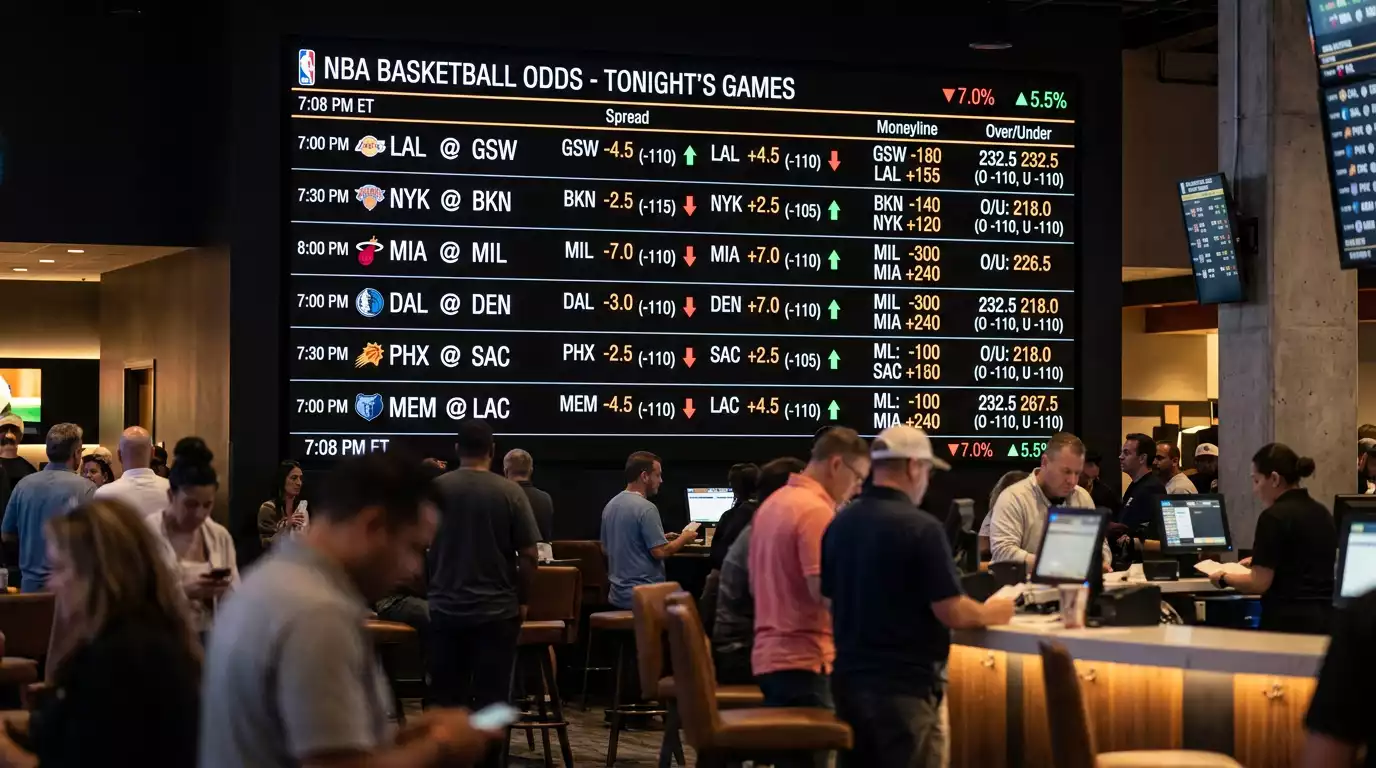
Donaghy’s value wasn’t in determining winners and losers. It was in manipulating the margin. Point spread betting dominates professional basketball wagering, and spreads represent the bookmakers’ best estimate of how much one team will beat another by. A referee who can reliably influence whether a game lands above or below that number possesses something incredibly valuable: consistent edge in a market where even a 2% advantage generates substantial profits over time.
The mechanics operated on multiple levels. Donaghy provided picks on games he would officiate, giving his betting partners advance knowledge of which games to target. But the scheme went beyond mere information sharing. A referee controls the flow of fouls, the pace of play, the accumulation of free throws that can swing a final margin by five or ten points without ever changing who walks away with the victory.
Brandon Lang, a prominent sports handicapper, explained the mathematics to ESPN: a crooked NBA referee can directly influence the outcome of a game 75 percent of the time if he has money on the game. That number haunted me when I first encountered it. Three out of four times, a single official can tilt a result toward the spread outcome he needs. The implications for betting markets — and for anyone who wagered against that invisible advantage — are staggering.
What made detection so difficult was the subtlety of the manipulation. An extra foul here, a questionable technical there, a slightly longer leash for one team’s aggressive defence — none of these individual decisions screams corruption. They’re within the normal variance of officiating judgment. Only when you aggregate the patterns across dozens of games does the statistical anomaly become visible. And even then, you need to be looking.
The Co-Conspirators Behind the Operation
Every corruption scheme requires infrastructure. Donaghy couldn’t place bets himself without immediate detection, and he couldn’t process the kind of money involved through normal channels. That’s where Jimmy Battista and Tommy Martino entered the picture.
Battista was a professional gambler with deep connections to betting markets across multiple jurisdictions. Martino was a childhood friend of Donaghy’s who served as the intermediary, the buffer between the referee and the gambling operation. This structure provided Donaghy with plausible deniability — at least in theory. He wasn’t directly placing bets. He was merely sharing information with an old friend.
The relationship dynamics mattered enormously. Martino’s existing connection to Donaghy provided the trust necessary to propose and execute a criminal conspiracy. Battista’s market access enabled bets large enough to justify the risk. Together, they formed a triangle that converted inside information into cash while maintaining enough separation to avoid immediate detection.
For those interested in the full story of how this network operated and eventually collapsed, I’ve covered the Battista-Martino gambling ring in detail elsewhere. What matters here is understanding that Donaghy wasn’t a lone actor. He was the informational centrepiece of an organised operation that knew exactly how to exploit what he provided.
From $2,000 to $5,000: The Payment Structure
The financial architecture of the scheme evolved as the operation matured. Initially, Donaghy received $2,000 in cash for each correct betting pick. That number might seem modest given the stakes involved, but it represented pure profit with minimal apparent risk — free money for sharing information he possessed simply by doing his job.
As the scheme progressed and its reliability became established, the payments escalated. By the 2006-07 season, Donaghy was receiving $5,000 per correct pick. The increase reflected both the proven value of his information and the growing confidence of his betting partners in the operation’s sustainability.
The total figures remain somewhat disputed. Co-conspirator Tommy Martino claimed in court testimony that Donaghy received $120,000 between December 2006 and April 2007 alone — roughly four months of payouts near the scheme’s peak. Gambler Jimmy Battista put the total higher, claiming payments of $201,000 to $209,000 over the full course of their arrangement.
Either figure represents life-changing money delivered in cash, unreported, and untraceable through normal financial channels. For context, NBA referees during that era earned between $100,000 and $300,000 annually depending on seniority and playoff assignments. Donaghy’s corruption income potentially doubled his legitimate salary while requiring no additional work beyond decisions he was already making on the court.
The payment structure also reveals something about how these schemes sustain themselves. Early payments establish the relationship. Escalating payments reward continued cooperation and raise the stakes of exposure. By the time someone is receiving $5,000 per game from people connected to serious gambling operations, walking away becomes far more complicated than simply refusing to participate.
The Numbers Don’t Lie: Donaghy’s Betting Success Rate
Numbers don’t care about narratives. They reveal patterns that human observation misses, and in the Donaghy case, the numbers were screaming long before anyone listened.
ESPN’s investigation found something remarkable: 10 straight games in 2007 where Donaghy officiated and the point spread moved 1.5 points or more before tip-off. In every single one of those games, the big money won. Not most of the time. Not usually. Every time, across ten consecutive contests. The probability of that occurring by chance is vanishingly small.
Professional bettors talk about “sharp money” — large wagers placed by sophisticated gamblers whose track record has earned respect from bookmakers. When sharp money moves, lines move. And lines were moving dramatically on Donaghy’s games, moving in ways that only make sense if someone with inside information was placing substantial bets.
The win rate on Donaghy’s picks reportedly hovered between 60 and 70 percent. That might not sound overwhelming to casual observers, but anyone who understands sports betting recognises those numbers as extraordinary. Breaking even on point spread bets requires winning roughly 52.4 percent of the time to overcome the standard vigorish. A sustained 60-plus percent win rate generates enormous profits and virtually never occurs through skill alone in a market as efficient as NBA basketball.
What these success rates demonstrate is the genuine informational advantage Donaghy possessed. He wasn’t guessing or relying on general basketball knowledge available to any sophisticated handicapper. He was providing something unique: advance knowledge of how specific games would be officiated by a specific referee who controlled key variables affecting the final margin.
Reading the Lines: How Sharp Money Moved
Line movement analysis became my obsession after the Donaghy revelations. Watching how spreads shifted on his games in the hours before tip-off revealed the footprints of insider betting that had been visible all along — if you knew where to look.
The pattern was distinctive. Games Donaghy officiated would open with normal lines based on standard handicapping factors: team records, injuries, home court advantage, recent form. Then, typically in the final hours before the game, significant money would appear on one side. The line would move. And more often than not, the side receiving the late money would cover.
Bookmakers aren’t stupid. They track betting patterns, identify sharps, and adjust lines to balance their exposure. But detecting corruption through line movement alone is genuinely difficult. Sharp bettors exist. Steam moves happen. Late information about injuries or lineup changes causes legitimate price adjustments. The question is always whether you’re seeing skill, luck, or something more sinister.
The retrospective analysis of Donaghy’s games showed movement patterns that were statistically anomalous, but that anomaly only became obvious when someone already knew to look. Real-time detection would have required surveillance systems and analytical frameworks that didn’t yet exist in 2007. The industry has since developed far more sophisticated monitoring, but Donaghy’s scheme operated in an era when line movement alone wasn’t enough to trigger serious investigation.
How the FBI Brought Down a Crooked Ref
The scheme didn’t collapse because of brilliant detective work or whistleblower courage. It collapsed because the people Donaghy was working with weren’t exclusively focused on basketball.
The FBI was investigating organised crime gambling operations in the New York area — wiretaps, surveillance, the full federal toolkit deployed against criminal enterprises far larger than one corrupt referee. Donaghy’s name emerged from those broader investigations as a connection point, someone whose relationship with known gambling figures warranted closer examination.
Once investigators understood what they were looking at, the case built quickly. Co-conspirators facing their own legal exposure became cooperative witnesses. Financial trails that seemed invisible to casual observation became clear under federal scrutiny. The infrastructure Donaghy had relied upon for anonymity — the intermediaries, the cash payments, the arms-length relationships — provided exactly the documentary evidence needed to construct conspiracy charges.
David Stern, the NBA Commissioner at the time, called it “the most serious situation and worst situation that I have ever experienced” — and he wasn’t exaggerating. For a league that depends entirely on the perceived fairness of competition, discovering that a referee had been systematically corrupted represented an existential threat to credibility. Stern announced that “no amount of effort, time or personnel is being spared to assist in this investigation, to bring to justice an individual who has betrayed the most sacred trust in professional sports.”
The investigation methodology itself offers lessons I still reference when discussing integrity monitoring. The FBI succeeded not by watching basketball games but by following financial and communication networks. The detection came from outside the sport’s own structures, which raises uncomfortable questions about whether internal league monitoring could have — or should have — caught the corruption earlier.
Arrest, Trial, and 15 Months Behind Bars
The arrest came in the summer of 2007, and professional basketball immediately entered crisis mode. Here was proof — not rumour, not conspiracy theory, but federal charges — that an NBA referee had been corrupted by gambling interests.
Donaghy initially cooperated with investigators, providing information about the scheme’s operations and, more controversially, making allegations about other referees and potential manipulation of high-profile games. The cooperation was strategic: defendants who provide substantial assistance to federal prosecutors typically receive sentencing considerations.
The legal proceedings moved through the federal court system with the peculiar combination of methodical process and intense public attention that characterises high-profile sports cases. Donaghy pleaded guilty to conspiracy to commit wire fraud and transmitting wagering information across state lines — charges that carried significant prison time but avoided the more severe penalties that a trial conviction might have brought.
Throughout the proceedings, questions swirled about what else Donaghy knew. He made allegations about other referees, about specific games, about systemic problems within NBA officiating. Prosecutors were careful to neither fully endorse nor completely dismiss these claims. Assistant U.S. Attorney Jeffrey Goldberg noted that “we’ve never taken the position that Mr. Donaghy has lied to us. But there is a difference between telling the truth and believing you’re telling the truth and finding out later that a number of the allegations don’t hold any water.”
The trial revealed operational details that shocked even those of us who study sports corruption professionally. The casualness of the payments, the longevity of the scheme, the apparent confidence that detection was unlikely — all of it painted a picture of systematic exploitation rather than momentary weakness.
The Sentencing That Shook Professional Sports
On 29 July 2008, Tim Donaghy received his sentence: 15 months in federal prison, followed by three years of supervised release. The judge also ordered $30,000 in fines and restitution.
Fifteen months. For someone who had spent four years corrupting the integrity of a major professional sports league, the sentence struck many observers as remarkably light. Federal sentencing guidelines, cooperation credits, and the specific charges filed all contributed to the outcome, but the perception remained that the punishment failed to match the magnitude of the betrayal.
The sentence reflected legal realities rather than moral judgments. Wire fraud and wagering transmission charges carry specific statutory ranges. Donaghy’s cooperation with investigators earned credit. His lack of prior criminal record factored into the calculation. The federal system processed him as a first-time offender who had pleaded guilty and assisted prosecution efforts, not as the architect of a four-year scheme that called into question the legitimacy of hundreds of professional basketball games.
For the betting public — the millions of people who had wagered on games Donaghy officiated without knowing they were competing against someone with inside information — the sentence offered no restitution. Losses stayed lost. The mathematical edge Donaghy and his partners enjoyed came directly from bettors who thought they were operating in a fair market.
I remember the sports betting community’s reaction vividly. Some saw the sentence as proof that the system protects insiders. Others viewed it as inevitable given how federal sentencing actually works. What united nearly everyone was the recognition that 15 months in prison wasn’t going to undo the damage to public trust in professional basketball officiating.
What Donaghy Left Behind: The Aftermath and Legacy
Donaghy served his time, wrote a book making additional allegations about NBA officiating, and faded from public attention. But the structural changes his scandal forced have shaped professional basketball ever since.
The NBA commissioned Lawrence Pedowitz, a former federal prosecutor, to conduct an independent investigation into officiating integrity. The resulting report ran 116 pages and found that 52 of 57 referees interviewed had engaged in some form of gambling — though not on NBA games. That finding alone demonstrated how permeable the boundary between officials and gambling culture had become.
Reforms followed. The league changed when referee assignments were announced, shifting from 90 minutes before tip-off to the morning of games. That single adjustment reduced the window for betting syndicates to act on assignment information. Background checks on officials became more rigorous. Monitoring of betting patterns on NBA games intensified.
The Pedowitz Report acknowledged that “because the potential for referee bias remains a threat to the integrity of the game, the League can do more.” That language — careful, bureaucratic, but unmistakably critical — signalled that even the NBA’s own commissioned investigation recognised systemic vulnerabilities extending beyond one corrupt individual.
For UK bettors wagering on NBA games today, the Donaghy legacy means operating in a more scrutinised environment. The monitoring systems that emerged from that scandal now flag suspicious betting patterns in real time. The complete history of NBA referee betting scandals shows how each incident has progressively tightened oversight.
What troubles me most about the aftermath isn’t what changed but what remains unknown. Donaghy operated for four seasons before detection. How many other schemes have operated without detection? The FBI caught him through investigations targeting his associates, not through any failure in his own operational security. That suggests the detection gap may be far larger than comfortable to acknowledge.
His legacy persists every time a controversial officiating decision triggers conspiracy theories online, every time a line moves sharply before tip-off, every time someone wonders whether the game they’re watching is entirely on the level. Tim Donaghy didn’t just corrupt basketball games. He corrupted the assumption that professional sports are inherently trustworthy — an assumption that, once lost, proves remarkably difficult to restore.
Your Questions About the Donaghy Scandal
How did the FBI discover Tim Donaghy was betting on games?
The FBI discovered Donaghy’s involvement through broader investigations into organised crime gambling operations in the New York area. His name emerged as a connection point to known gambling figures, which triggered closer examination of his activities and communications with suspected betting operatives.
What percentage of Tim Donaghy’s betting picks were successful?
Analysis suggests Donaghy’s picks achieved a win rate between 60 and 70 percent against the spread. ESPN’s investigation found 10 consecutive games where line movements favoured the side receiving late money on games he officiated, with that side winning every time.
Did Tim Donaghy fix the 2002 Lakers-Kings playoff series?
Donaghy made allegations about referee behaviour during the controversial 2002 Western Conference Finals, but federal prosecutors neither fully endorsed nor dismissed these claims. The NBA investigated and found no conclusive evidence of manipulation in that specific series.
How much money did Tim Donaghy make from fixing games?
Payment estimates vary between sources. Co-conspirator Tommy Martino claimed Donaghy received $120,000 between December 2006 and April 2007. Gambler Jimmy Battista estimated total payments of $201,000 to $209,000. Donaghy received $2,000 per correct pick initially, increasing to $5,000 per pick during the 2006-07 season.
Created by the ”nba ref Betting on Games” editorial team.