NBA Betting Line Movements: Reading Sharp Money and Suspicious Shifts
 Available in US
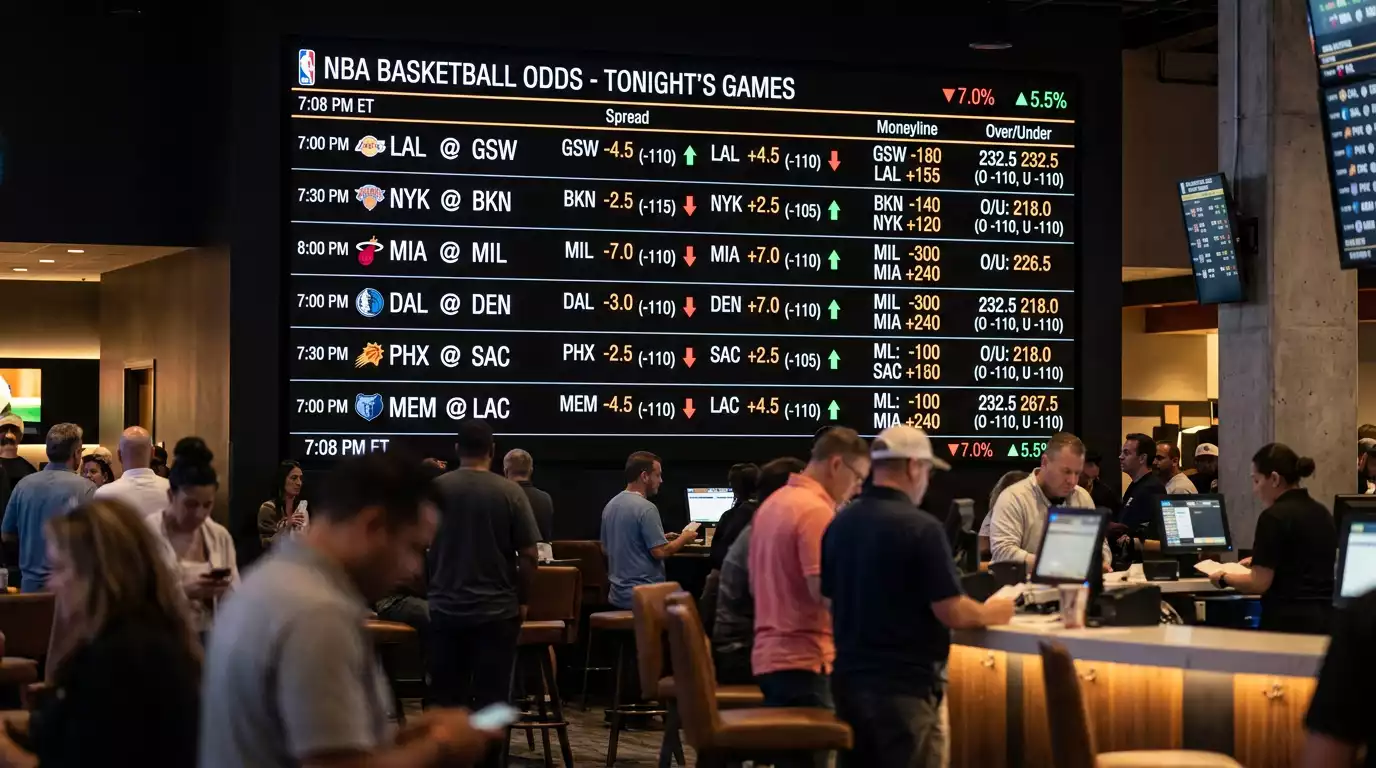
The phone call came at 6 AM Vegas time: “The Lakers line just moved three points in ninety seconds. Something’s happening.” That was 2006, and I was still learning that line movements could tell you more than any statistical model. The game in question turned out to be one Tim Donaghy officiated. The sharp money knew something the public didn’t.
Line movement analysis has become my primary tool for evaluating NBA betting markets. Not because movements predict winners, but because they reveal information asymmetry. When money flows in patterns that don’t match public sentiment, someone knows something. Understanding what those patterns mean separates informed bettors from everyone else.
Normal Versus Suspicious Line Movements
Normal line movement follows predictable rhythms. Lines open, sharps bet, adjustments happen, and the number stabilises as kickoff approaches. A spread that opens at -6, moves to -6.5 on early action, then settles at -6 after injury news is behaving exactly as markets should.
Suspicious movements look different. They’re often larger, faster, and disconnected from public information. When ESPN analysed games Donaghy worked, they found 10 straight where the point spread moved 1.5 points or more before tip-off, with the side receiving heavy sharp action winning every time. That kind of consistency doesn’t happen naturally.
The mathematics are instructive. In efficient markets, line movements should reflect new information and help oddsmakers achieve balanced action. Over time, the side receiving late money should win roughly 50% against the closing spread. When one direction wins at 70% or 80%, something is distorting the market.
I’ve learned to flag movements that combine multiple warning signs: unusual speed, atypical sources, correlation with specific officials or participants. Any single factor might be coincidental. Multiple factors together suggest inside information is entering the market.
Steam Moves and What They Indicate
A steam move happens when multiple sharp bettors simultaneously back the same side, causing lines to shift rapidly across the entire market. These moves coordinate through betting syndicates that place wagers at multiple sportsbooks within seconds of each other.
Steam moves reflect conviction among sophisticated bettors. They’ve identified an edge, whether through superior models, injury information, or situational analysis, and they’re exploiting it before the market can adjust. Following steam moves can be profitable if you catch them early, but chasing after the line has already moved typically destroys any edge.
The problem for retail bettors is speed. By the time you notice a steam move on a tracking website, professional bettors have already locked in favourable numbers. You’re left betting the adjusted line, which prices in the information the sharps identified. The value has evaporated even if the analysis remains sound.
Steam moves on NBA games typically happen within two hours of tip-off, when lineups are confirmed and late-breaking information becomes available. Monitoring line movements during this window reveals where sophisticated money is going, even if you can’t act on it fast enough to capture the best numbers.
Reverse Line Movement Explained
Reverse line movement occurs when a line moves opposite to where betting volume suggests it should. If 75% of bets back the Celtics but the line moves away from Boston, the sportsbook is telling you that the 25% on the other side matters more than the majority.
This happens because not all bets are equal. A professional bettor placing £50,000 carries more weight than a hundred recreational bettors placing £100 each. Sportsbooks track who’s betting, not just what they’re betting, and they adjust lines based on respect for specific accounts.
Reverse line movement is one of the most reliable indicators of sharp opinion. The market is essentially discounting public sentiment in favour of professional assessment. Bettors who track these patterns can align with sharps rather than fading them.
The caveat is that reverse line movement doesn’t guarantee outcomes. Sharp bettors are skilled but not infallible. They might be wrong, or they might be betting angles that don’t apply to the specific game. Reverse line movement provides information, not certainty.
The Donaghy Line Patterns
The most instructive case study in suspicious line movements comes from games Tim Donaghy officiated during his four seasons of betting on games. Subsequent analysis revealed patterns that should have raised alarms long before federal investigators got involved.
The key indicator was consistency. Sharp money backing one side before Donaghy’s games won at rates that defied statistical probability. Ten consecutive games where 1.5-point or larger movements correctly predicted the outcome isn’t luck. It’s information.
The timing of movements also mattered. Sharp action on Donaghy’s games often came earlier than typical steam moves, suggesting the information entered the market before last-minute lineup confirmations. This timeline was consistent with referee assignment information, which Donaghy shared with gambling associates before public announcement.
What makes the Donaghy patterns valuable for current bettors is their instructive quality. They show what manipulation looks like in line movements. Unusual consistency, atypical timing, disconnection from public information, and correlation with specific participants. These remain warning signs regardless of whether current games face similar corruption.
Practical Monitoring for Bettors
You don’t need sophisticated software to track meaningful line movements. Free services display historical line movements for major sports. Setting up alerts for games you’re interested in allows you to see how spreads evolve from opening to close.
The metrics worth tracking are simple: opening line, closing line, and the timing of significant movements. Games where the line moves more than two points from open to close warrant attention. Games where movement happens rapidly and late suggest information entering the market.
What you’re looking for isn’t necessarily actionable betting opportunities. It’s context. Understanding why a line moved helps you evaluate whether your own analysis aligns with or contradicts sharp opinion. If you love a side and the line is moving against you, that’s worth reconsidering. If you love a side and line movement confirms it, you have additional confidence.
For UK bettors using operators that don’t display line history, comparing odds across multiple books reveals similar information. If one book has materially different odds than others, something is driving that divergence. Understanding how manipulation affects lines helps you interpret what those divergences might mean.
The fundamental lesson from twenty years of watching line movements is humility. Markets are smarter than any individual bettor. When lines move in ways you don’t understand, the market probably knows something you don’t. Respecting that collective wisdom, while remaining alert for the rare corrupted signal, is how sustainable betting works.
What is a steam move in NBA betting?
A steam move occurs when multiple sharp bettors simultaneously back the same side across multiple sportsbooks, causing rapid line movement throughout the market. These coordinated wagers reflect professional conviction about a particular side.
How can bettors spot suspicious line movements?
Warning signs include unusual speed of movement, consistency of results following movements, timing disconnected from public information, and correlation with specific officials or participants. Multiple factors together suggest inside information rather than normal market dynamics.
Did line movements reveal Tim Donaghy’s manipulation?
Yes. ESPN analysis found 10 consecutive games Donaghy officiated where spreads moved 1.5 points or more before tip-off, with the side receiving sharp money winning every time. This pattern of consistency far exceeded what normal market dynamics would produce.
Published by the nba ref Betting on Games team.