NBA Gambling Scandal 2025: Rozier, Billups and the 34 Arrests Explained
 Available in US
Table of Contents
- October 2025: The Morning Everything Changed
- Terry Rozier: From All-Star to Federal Defendant
- Chauncey Billups: A Champion’s Fall From Grace
- The Mob Connection: La Cosa Nostra’s NBA Investment
- Seven Games Under Federal Scrutiny
- The NBA’s Response: Silver Speaks
- Where the Cases Stand Now
- Understanding the 2025 Charges
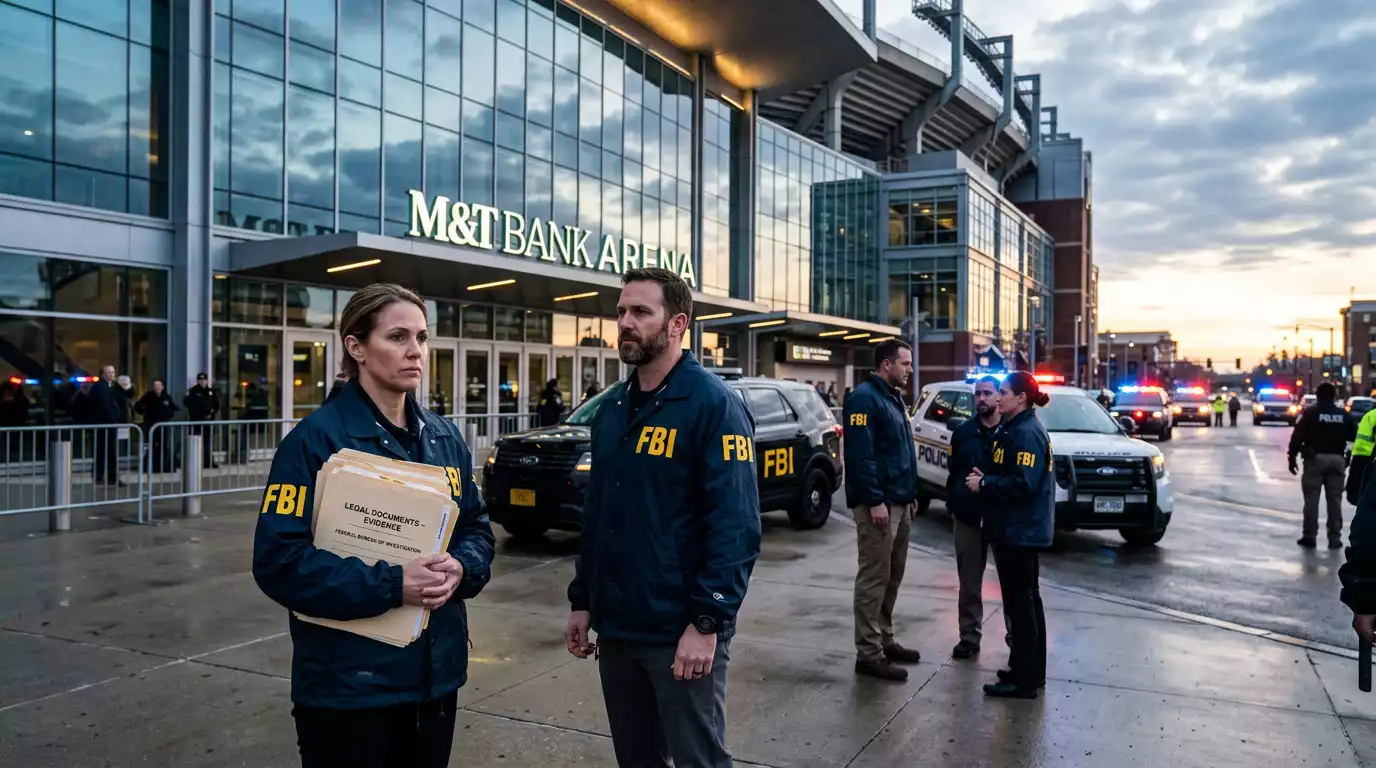
I was reviewing overnight line movements when the news alerts started flooding my phone. Thirty-four people arrested. Current NBA players named. Former stars in handcuffs. La Cosa Nostra connections. On 23 October 2025, everything I’d warned might happen actually happened — and it was worse than anyone outside law enforcement had imagined.
The scope stunned even those of us who study sports corruption professionally. This wasn’t one rogue referee operating in the shadows. This was an organised network involving active players, former champions, and alleged ties to multiple mafia families. Federal prosecutors identified at least seven NBA games between February 2023 and March 2024 under scrutiny for manipulation — games millions of people bet on without knowing the fix might be in.
FBI Director Kash Patel didn’t mince words at the press conference: “Let’s not mince words. This is the insider trading saga for the NBA.” The comparison to financial crimes was deliberate. What prosecutors allege isn’t simple gambling — it’s the systematic exploitation of confidential information for profit, conducted through channels that allegedly funneled money to organised crime.
For UK bettors who wager on American basketball, this scandal raises fundamental questions about market integrity that extend far beyond Nevada sportsbooks. If insider information was being exploited on this scale, it was affecting betting lines globally — including every wager placed through British bookmakers on the games in question.
October 2025: The Morning Everything Changed
The arrests swept across multiple states simultaneously, a coordinated federal operation designed to prevent anyone from fleeing or destroying evidence. By the time most Americans were finishing their morning coffee, booking photos were circulating and the NBA’s integrity crisis had entered its most severe phase since Tim Donaghy.
Christopher Raia, Assistant Director in Charge of the FBI New York Field Office, framed the operation in stark terms: “This alleged illegal gambling operation defrauded innocent victims out of tens of millions of dollars and established a financial funnel for La Cosa Nostra.” That last phrase — financial funnel for La Cosa Nostra — transformed this from a sports scandal into something with far darker implications.
U.S. Attorney Joseph Nocella Jr. for the Eastern District of New York laid out the government’s theory: “This scheme is an insider sports betting conspiracy that exploited confidential information about National Basketball Association athletes and teams.” The word “confidential” matters enormously here. This wasn’t about skill handicapping or smart betting. This was about information advantages that legitimate bettors could never access.
Nocella delivered a line that will likely be quoted in sports integrity discussions for years: “My message to the defendants who’ve been rounded up today is this: your winning streak has ended, your luck has run out. Violating the law is a losing proposition, and you can bet on that.” The confidence suggested prosecutors believed they had built cases that would hold up under scrutiny.
Kash Patel quantified the scale: “It’s not thousands of dollars. It’s not tens of thousands of dollars. It’s not even millions of dollars. We’re talking about tens of millions of dollars in fraud, in theft, in robbery.” Those numbers represent the aggregate harm across the alleged conspiracy — money extracted from betting markets through exploitation of inside information.
Who Got Arrested: The Full List
The arrest list read like a collision between NBA history and federal crime blotter. Active players, retired stars, and alleged gambling operatives all appeared in the same indictment — a mix that demonstrated how deeply the scheme had allegedly penetrated basketball’s inner circles.
Terry Rozier, then an active NBA player with the Miami Heat, faced the most immediate attention. A starting point guard on a playoff team, Rozier represented the nightmare scenario for league integrity: a current player allegedly providing confidential information to betting operations while still taking the court.
Chauncey Billups, a five-time All-Star and 2004 NBA Finals MVP, brought historical weight to the allegations. His name attached to federal gambling charges connected the scandal to basketball’s championship legacy, suggesting the alleged network had cultivated relationships across generations of players.
Damon Jones, another former NBA player, rounded out the basketball names that generated immediate headlines. But the full list of 34 defendants extended far beyond recognisable athletes into alleged gambling operators, intermediaries, and individuals prosecutors connected to organised crime families.
What struck me about the arrest composition was its structure. This wasn’t random individuals making bad decisions independently. The indictment described an organised hierarchy — information sources, betting operatives, money handlers — that suggested deliberate design rather than opportunistic corruption.
Terry Rozier: From All-Star to Federal Defendant
Terry Rozier’s alleged involvement centres on something that sounds almost mundane until you understand its value: injury information. Specifically, advance knowledge about his own physical condition that he allegedly shared with gambling operatives before that information became public.
The federal indictment alleges Rozier received $100,000 for providing insider information about his injury status before a March 2023 game. One hundred thousand dollars for telling someone he trusted how his body felt and what that meant for his expected playing time. That price tag reveals just how valuable confidential injury data has become in modern sports betting markets.
The mechanics matter for understanding why this type of information commands such premiums. NBA player prop bets — wagers on individual statistical performances like points scored, rebounds grabbed, or minutes played — have exploded in popularity. These bets are extraordinarily sensitive to playing time. A player dealing with a nagging injury who might exit early or play limited minutes will almost certainly underperform his statistical projections.
Gamblers allegedly placed over $200,000 in bets predicting Rozier’s underperformance before sportsbooks had any opportunity to adjust their lines. That’s the window insider information creates: a brief period where you know something the market doesn’t, allowing you to place bets at prices that don’t reflect reality.
The charges against Rozier represent a template for how modern corruption differs from the Donaghy era. No one is alleging Rozier fixed outcomes or manipulated on-court play. The allegation is simpler and arguably harder to prevent: he allegedly told the wrong people the truth about his own health, and those people used that truth to extract money from betting markets.
The March 2023 Game That Started It All
The game that allegedly started it all took place on 23 March 2023, when the Miami Heat faced the New Orleans Pelicans. On paper, it was a routine regular season contest. In reality, according to federal prosecutors, it became exhibit A in the government’s case.
Terry Rozier played only 9 minutes and 36 seconds before leaving the game with what was reported as a foot injury. For anyone who had bet on his under props that night — wagering he would score fewer points or play fewer minutes than projected — that early exit converted their tickets into winners.
The NBA’s own monitoring systems flagged the unusual betting activity on Rozier’s props in real time. As the league later stated: “While the unusual betting on Terry Rozier’s ‘unders’ in the March 2023 game was detected in real time because the bets were placed legally, we believe there is more that can be done from a legal/regulatory perspective to protect the integrity of the NBA.”
That detection capability demonstrates both progress and limitation. The monitoring worked — abnormal betting patterns triggered alerts before the game even concluded. But detection alone doesn’t prevent the underlying corruption. By the time analysts flagged the suspicious activity, the bets were already placed and the information advantage had already been exploited.
What happened between detection and arrest took nearly two and a half years. The investigation that began with flagged betting patterns eventually expanded into the sweeping federal case announced in October 2025. That timeline suggests either the complexity of building prosecutable cases against multiple defendants or the time required to uncover the full scope of alleged criminal activity.
Chauncey Billups: A Champion’s Fall From Grace
Chauncey Billups won an NBA championship. He earned Finals MVP honours. He built a career that put him among the elite point guards of his generation. And on 23 October 2025, his name appeared alongside federal gambling charges that threatened to redefine his legacy.
The Billups allegations carry particular weight because of what he represents within basketball culture. This isn’t a marginal player or someone whose career ended under a cloud. Billups was a respected veteran, a player whose basketball IQ and competitive integrity were celebrated throughout his playing days. His post-playing career included coaching — he served as head coach of the Portland Trail Blazers — further embedding him within the league’s institutional structure.
The specifics of Billups’ alleged involvement remain subject to ongoing legal proceedings. What the indictment suggests is a network that cultivated relationships with individuals who possessed both access to confidential information and credibility within basketball circles. Former players fit that profile precisely: they maintain connections throughout the league while no longer being subject to active player conduct rules.
For the betting public, Billups’ inclusion in the indictment raises uncomfortable questions about how many other former players might maintain similar relationships with gambling operations. The transition from active player to retired celebrity creates both opportunity and motive. Information access may diminish but doesn’t disappear entirely. Financial pressures exist for some former athletes. And the social circles that include active players, former players, and various hangers-on provide natural channels for information to flow.
I’ve watched the sports integrity space long enough to know that allegations aren’t convictions. Billups, like all defendants, deserves the presumption of innocence. But the mere fact that federal prosecutors believed they had sufficient evidence to charge someone of his stature signals the seriousness with which the government views the underlying conduct.
The Mob Connection: La Cosa Nostra’s NBA Investment
The moment La Cosa Nostra entered the conversation, the 2025 scandal transformed from sports corruption into something with far older and darker roots. Organised crime’s alleged involvement meant this wasn’t just about basketball or betting — it was about criminal enterprises viewing professional sports as an investment opportunity.
Christopher Raia’s statement that the operation “established a financial funnel for La Cosa Nostra” placed the NBA gambling scheme within the broader context of how organised crime monetises legitimate industries. Sports betting provides near-perfect conditions for money laundering: high volume, cash-friendly, and subject to outcome uncertainty that masks suspicious patterns.
The alleged structure described by prosecutors suggests sophistication beyond typical gambling corruption. Multiple layers separated information sources from ultimate beneficiaries. Payment channels obscured connections. The organisational discipline required to maintain such separation speaks to criminal experience rather than amateur improvisation.
For those wanting the complete picture of how these alleged connections functioned, I’ve detailed the La Cosa Nostra NBA gambling connection separately. What matters for understanding the 2025 scandal’s significance is recognising that alleged mafia involvement elevates the stakes for everyone: law enforcement, the league, and bettors who may have been competing against criminal operations without knowing it.
Four Families, One Scheme
Federal prosecutors identified alleged connections to four of New York’s historic organised crime families: Bonanno, Gambino, Lucchese, and Genovese. That breadth suggests either remarkable cooperation among traditionally competitive criminal organisations or independent operations that happened to converge on the same vulnerable target.
Each family allegedly played distinct roles within the broader scheme. Some connections involved alleged bet placement through networks that could handle significant volume without triggering sportsbook scrutiny. Others allegedly participated in the financial infrastructure required to move and launder proceeds. The division of labour mirrors how organised crime has historically approached legitimate business infiltration: specialisation and compartmentalisation.
The historical irony is thick. Professional basketball’s integrity problems date back decades, with organised crime’s fingerprints appearing in various eras. The assumption within the industry had been that modernised monitoring, legal sports betting expansion, and increased scrutiny had pushed mob involvement to the margins. The 2025 indictments suggest that assumption was optimistic.
What organised crime involvement means for ordinary bettors is straightforward: they were allegedly competing against criminal operations with advantages they couldn’t match. Inside information. Sophisticated betting networks. The ability to place significant volume without detection. Every edge the alleged conspirators possessed came directly from the pockets of bettors who thought they were operating in a fair market.
Seven Games Under Federal Scrutiny
Federal prosecutors identified at least seven NBA games between February 2023 and March 2024 as subjects of manipulation investigation. Seven games across thirteen months might sound limited, but the reality is more troubling than that number suggests.
Those seven games represent what prosecutors could prove with evidence sufficient for federal charges. The actual scope of alleged manipulation may extend further — investigative limitations, evidentiary challenges, and resource constraints all affect which incidents make it into indictments. What gets charged reflects what can be prosecuted, not necessarily what occurred.
Each of those seven games involved real bets placed by real people who had no idea they might be competing against informed insiders. Every point spread wager, every player prop, every parlay that included those contests operated under assumptions of fair market conditions. The allegations suggest those assumptions were false.
The time span matters analytically. Thirteen months of alleged activity indicates sustainability rather than isolated incidents. Someone was confident enough in their operational security to continue exploiting inside information across an entire NBA season and into the next. That confidence suggests either sophisticated counter-detection measures or a belief that the rewards justified the risks.
For integrity analysts, the specific games provide data points for pattern recognition. What did betting markets look like before those games? Were there line movements consistent with inside information reaching the market? How did actual outcomes compare to betting market expectations? The answers to those questions inform how we detect similar manipulation in the future.
The NBA’s Response: Silver Speaks
Adam Silver has navigated league crises before, but his response to the October 2025 arrests carried a weight that previous statements hadn’t required. This wasn’t a single bad actor or an isolated incident. This was systemic, allegedly involving current players and organised crime.
Silver’s initial statement acknowledged the visceral impact: “There’s nothing more important to the league and its fans than the integrity of the competition. I had a pit in my stomach. It was very upsetting.” That candour — admitting personal distress rather than retreating into corporate language — reflected the genuine threat the scandal posed to the NBA’s credibility.
In a later interview, Silver elaborated: “My initial reaction was I was deeply disturbed.” The repetition of emotional language across multiple statements signalled that the commissioner understood this moment differed from standard crisis management. Fans needed to hear that league leadership grasped the magnitude of what had allegedly occurred.
The NBA’s official response extended beyond rhetoric to policy advocacy. League communications emphasised detection capability while acknowledging limitations: “While the unusual betting on Terry Rozier’s ‘unders’ in the March 2023 game was detected in real time because the bets were placed legally, we believe there is more that can be done from a legal/regulatory perspective to protect the integrity of the NBA.”
That statement contains an implicit argument for expanded league authority over betting markets. The NBA has consistently advocated for greater control over which bet types operators can offer, particularly regarding player props that are vulnerable to manipulation. The 2025 scandal provided powerful evidence supporting that position.
Silver also addressed the broader question of prop bet vulnerability on The Pat McAfee Show: “It’s too easy to manipulate something which seems otherwise small and inconsequential to the overall score. There’s nothing more important than the integrity of the competition.” The framing acknowledged what critics have argued for years: granular betting markets create manipulation opportunities that didn’t exist when bets focused primarily on game outcomes.
Where the Cases Stand Now
Federal criminal cases move slowly, particularly when they involve multiple defendants and complex financial evidence. As of early 2026, the legal proceedings flowing from the October arrests remain in their preliminary stages.
The defendants face charges including wire fraud, conspiracy, and gambling-related offences that carry significant potential sentences. Federal conviction rates exceed 90 percent, which historically creates pressure for plea negotiations rather than trials. How individual defendants respond to that pressure will shape how much additional information becomes public.
Cooperation remains a crucial variable. Defendants who provide substantial assistance to prosecutors often receive reduced sentences, creating incentives to share information about broader operations or additional participants. Whether any of the 34 arrested individuals choose cooperation over contested prosecution will influence both sentencing outcomes and the investigation’s potential expansion.
The NBA faces its own institutional reckoning separate from criminal proceedings. Player discipline operates under collective bargaining rules distinct from criminal law standards. The league could impose suspensions or other penalties even without waiting for criminal convictions, though the players’ union would likely contest aggressive action before legal outcomes are determined.
For those following the case, the coming months will reveal whether the October arrests represented the operation’s full scope or merely its visible surface. Federal investigations frequently expand as cooperating witnesses provide new information and financial analysis uncovers additional connections. The 34 arrests may prove to be the beginning rather than the conclusion of exposure.
What I’ll be watching for particularly closely is evidence about detection timelines. The gap between the March 2023 game that triggered initial alerts and the October 2025 arrests spans more than two years. Understanding what happened during that interval — continued investigation, additional alleged crimes, bureaucratic delay — will inform assessments of whether current monitoring systems are adequate.
Understanding the 2025 Charges
Who are Terry Rozier and Chauncey Billups and what are they charged with?
Terry Rozier was an active NBA player with the Miami Heat when arrested. Chauncey Billups is a former five-time All-Star and 2004 Finals MVP. Both face federal charges related to an alleged insider betting conspiracy. Rozier allegedly received $100,000 for providing confidential injury information before a March 2023 game.
How many games were allegedly fixed in the 2025 NBA scandal?
Federal prosecutors identified at least seven NBA games between February 2023 and March 2024 as subjects of manipulation investigation. This number represents cases with sufficient evidence for federal charges and may not reflect the full scope of alleged activity.
What is the connection between the 2025 arrests and La Cosa Nostra?
Prosecutors allege the gambling operation established a financial funnel for La Cosa Nostra, with connections to four New York organised crime families: Bonanno, Gambino, Lucchese, and Genovese. FBI officials described the scheme as defrauding victims out of tens of millions of dollars.
What penalties do the accused face if convicted?
The defendants face federal charges including wire fraud and conspiracy that carry significant potential prison sentences. Federal conviction rates exceed 90 percent. Individual outcomes will depend on specific charges, evidence, and whether defendants choose to cooperate with prosecutors in exchange for reduced sentences.
Written by the editors at nba ref Betting on Games.