Betting on Injured NBA Players: Prop Market Risks and Information Asymmetry
 Available in US
The call came from a sportsbook risk manager I’d known for years. “We’ve got a problem. Someone just hammered the under on a player prop, and thirty minutes later the team announced he’s playing through a knee injury.” That conversation happened in 2019, and it taught me something I should have understood earlier: injury information is the most valuable currency in modern sports betting.
When Terry Rozier allegedly received $100,000 for information about his injury status before a specific game, he wasn’t selling something exotic. He was selling what every sharp bettor wants: certainty in an uncertain market. Understanding how injury information creates betting edges, and why that edge attracts corruption, helps explain the integrity risks facing NBA prop markets.
Why Injury Information Creates Betting Value
NBA player props are priced based on expected performance. When a sportsbook sets Jayson Tatum’s points line at 27.5, they’re estimating what a healthy, fully engaged Tatum typically produces. But “healthy and fully engaged” contains enormous uncertainty that insiders can resolve.
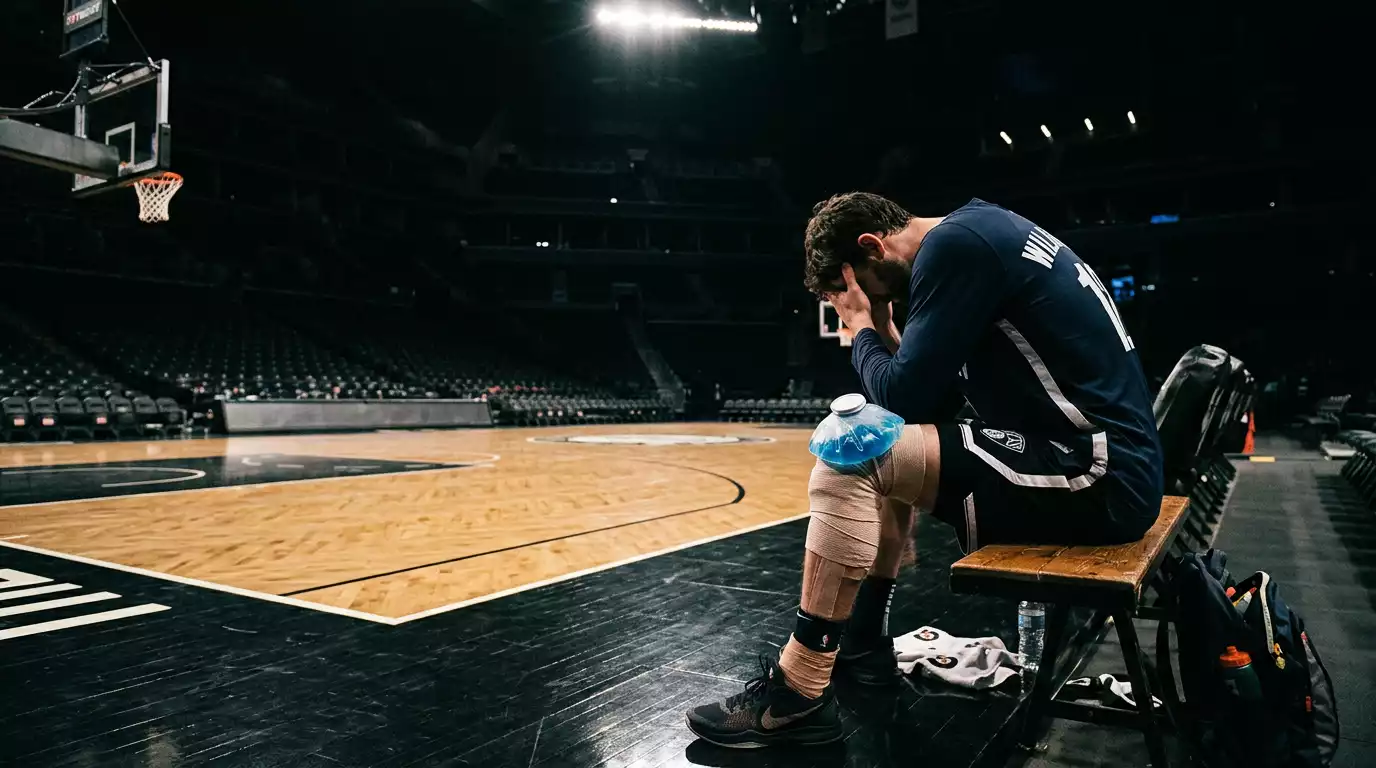
A player dealing with a minor ankle sprain might still suit up but play with reduced explosiveness. The injury doesn’t appear on official reports because it’s not serious enough to question availability. But that reduced explosiveness affects rebounds, blocks, and scoring efficiency. Someone who knows about the injury can bet unders with confidence the market doesn’t share.
The asymmetry is pronounced because NBA teams have incentives to conceal injury information. Revealing that a star is compromised gives opponents strategic advantages. Teams prefer ambiguity that preserves competitive flexibility. This strategic concealment creates opportunities for anyone with access to accurate information.
Federal prosecutors alleged that Terry Rozier exploited exactly this dynamic. According to the indictment, he provided information about his injury status to gambling associates who then bet against his performance. The market hadn’t priced in his limitation; they had certainty the market lacked.
How Prop Markets Are Vulnerable
Player prop markets face structural vulnerabilities that game outcome markets don’t share. To influence whether the Celtics beat the Lakers requires coordinating multiple players or officials. To influence whether a single player exceeds a statistical threshold requires only that player’s participation.
Adam Silver addressed this directly: “It’s too easy to manipulate something which seems otherwise small and inconsequential to the overall score. There’s nothing more important than the integrity of the competition.” The NBA Commissioner’s concern reflects how prop markets create individual-level manipulation opportunities.
Liquidity differences compound the vulnerability. Major game outcome markets attract substantial betting volume, making unusual patterns more visible. Player props, especially for role players, have thinner markets where large bets stand out less clearly. A sophisticated operation can spread wagers across multiple platforms to avoid detection.
The Jontay Porter case demonstrated these vulnerabilities before Rozier’s alleged conduct came to light. Porter manipulated his own props by exiting games early, triggering under bets placed by associates. The scheme was detected, but only after multiple instances created patterns obvious enough to investigate.
The Information Chain From Locker Room to Betting Market
Injury information travels through predictable channels, and each node in the chain represents a potential leak. Team medical staff know first. Coaches learn next for lineup planning. Players know their own status and often teammates’ conditions. Family members, agents, and close associates receive updates through normal communication.
U.S. Attorney Joseph Nocella Jr. described the 2025 scheme explicitly: “This scheme is an insider sports betting conspiracy that exploited confidential information about National Basketball Association athletes and teams.” The legal theory treats information-sharing as the predicate for fraud, recognising that the betting edge comes from the information itself.
What makes the chain difficult to secure is that most information-sharing is legitimate. Players discussing injuries with family, agents coordinating media availability, coaches communicating with management, none of this is inherently problematic. The corruption occurs when that information reaches gambling interests, often through intermediaries who obscure its source.
Detection focuses on the betting side rather than the information side. Unusual wagers trigger investigation that traces back toward information sources. But by the time suspicious betting is detected, the information has already been exploited. The damage is done even when the scheme is eventually exposed.
Regulatory Responses to Injury-Based Manipulation
Following the Porter and Rozier cases, regulators and leagues have considered various responses. Restricting player prop markets entirely would eliminate the vulnerability but sacrifice substantial revenue. More targeted approaches focus on specific bet types or player categories.
Sportsbooks agreed to stop offering player prop bets on athletes with two-way contracts or 10-day deals following the Porter scandal. This restriction acknowledged that players in precarious roster positions face different incentives than established stars. But it didn’t address manipulation by well-paid players like Rozier.
Enhanced injury reporting requirements have been proposed but face practical limitations. Teams resist real-time disclosure that would help opponents. Players have medical privacy interests that conflict with betting market transparency. Balancing these concerns against integrity needs creates policy challenges without clear solutions.
The NBA’s position favours league control over which bet types operators can offer. An official memo stated: “Core to the NBA’s position is that sports leagues should have control over the types of bets offered on their games.” This would allow selective restriction of vulnerable markets without blanket prohibition.
How Bettors Can Assess Injury-Related Risks
For UK punters wagering on NBA player props, injury-based manipulation represents a real but difficult-to-quantify risk. You can’t know whether insiders have exploited information on any particular game. What you can do is understand the risk factors and adjust accordingly.
Markets on stars with chronic injury concerns carry elevated risk. A player managing a persistent condition creates ongoing information asymmetry. Each game involves internal assessment of whether they’re healthy enough to perform normally, and that assessment happens before markets can adjust.
Late scratches and lineup changes often follow suspicious betting activity. If you see significant line movement on a player prop without public news explaining it, that movement might reflect information you don’t have. Betting against such movements means betting against potentially informed money.
Sticking to game outcome markets rather than individual props reduces exposure to single-player manipulation. The trade-off is potentially less interesting betting opportunities and lower margins on straightforward markets. But reduced exposure to integrity risk has value that’s hard to quantify until things go wrong.
The fundamental reality is that injury information asymmetry benefits insiders at bettors’ expense. Until regulatory frameworks close these gaps, or until information disclosure requirements change dramatically, the vulnerability persists. Understanding that you’re betting into markets where others may have better information is the first step toward managing the risk.
Why is injury information so valuable for NBA betting?
Injury information resolves uncertainty that betting markets can’t accurately price. A player dealing with an undisclosed limitation will likely underperform expectations, creating predictable edges for anyone with accurate inside information about their condition.
How did Terry Rozier allegedly exploit injury information?
According to federal prosecutors, Rozier received $100,000 for providing information about his injury status before a specific game. Associates then bet against his performance, exploiting certainty about his limitation that public markets didn’t have.
What restrictions exist on injury-related prop betting?
Following the Porter scandal, sportsbooks stopped offering player props on two-way and 10-day contract players. The NBA advocates for league control over which bet types operators can offer, which would allow targeted restriction of vulnerable markets.
Prepared by the nba ref Betting on Games editorial staff.