In-Play NBA Betting Manipulation: Real-Time Markets and Real-Time Risks
 Available in US
The bet hit just before the third quarter buzzer: live spread, adjusted for the current score, requiring the trailing team to cover a reduced margin. Within seconds of my confirmation, the team’s point guard committed an offensive foul that killed their momentum. Coincidence? Almost certainly. But the experience taught me something about in-play betting that pre-match markets don’t reveal: the speed creates both opportunity and vulnerability.
In-play betting is predicted to account for 65% of all sports wagers by 2028. For NBA games, the growth has been even faster. The constant action, frequent scoring, and television timeouts create natural betting windows that pre-match markets can’t match. But the same dynamics that make in-play betting attractive also make it harder to monitor and potentially easier to manipulate.
How In-Play NBA Markets Function
In-play markets update continuously based on game developments. Spreads adjust after scoring. Totals recalibrate as points accumulate. Player props evolve with each minute played. The odds you see at tip-off bear little resemblance to what’s offered midway through the second quarter.
The speed of adjustment distinguishes in-play from traditional betting. Pre-match lines have hours to stabilise as information incorporates. In-play lines must react within seconds to scoring runs, injuries, foul trouble, and momentum shifts. This speed creates both efficiency challenges and exploitation opportunities.
Sportsbooks use algorithmic models to generate in-play odds. Human traders can’t process information fast enough to adjust lines in real time. The algorithms incorporate scoring, possession, time remaining, and various statistical inputs to estimate updated probabilities. But algorithms can be slow to recognise certain situations.
The human element matters at specific moments. Television broadcasts have slight delays. Arena feeds run faster. Anyone with access to real-time court information could theoretically exploit the gap between actual events and broadcast events that inform public betting. This latency arbitrage isn’t corruption, but it illustrates how information timing creates edges.
Manipulation Opportunities During Games
In-play betting creates manipulation opportunities that don’t exist in pre-match markets. A corrupt participant doesn’t need to affect the final outcome; they only need to influence specific moments when targeted bets can be placed.
Consider a referee who calls a questionable foul during a timeout. The resulting free throws might not change who wins, but they shift the live spread at a predictable moment. Someone who knew that call was coming could position themselves before it happened. The window is narrow, but the edge is concrete.
Player-level manipulation follows similar logic. An athlete who deliberately commits a turnover or takes a bad shot at a specific moment creates predictable market movements. Associates watching the game could bet against that player’s team during the live window when the mistake occurs. The coordination requires communication, but the execution is straightforward.
The detection challenge is that in-play manipulation looks like normal variance. Basketball games feature constant momentum swings, unexpected plays, and improbable sequences. Distinguishing a corrupt moment from a random one requires either catching the communication or identifying statistical patterns across multiple games.
Detection Limitations for Live Markets
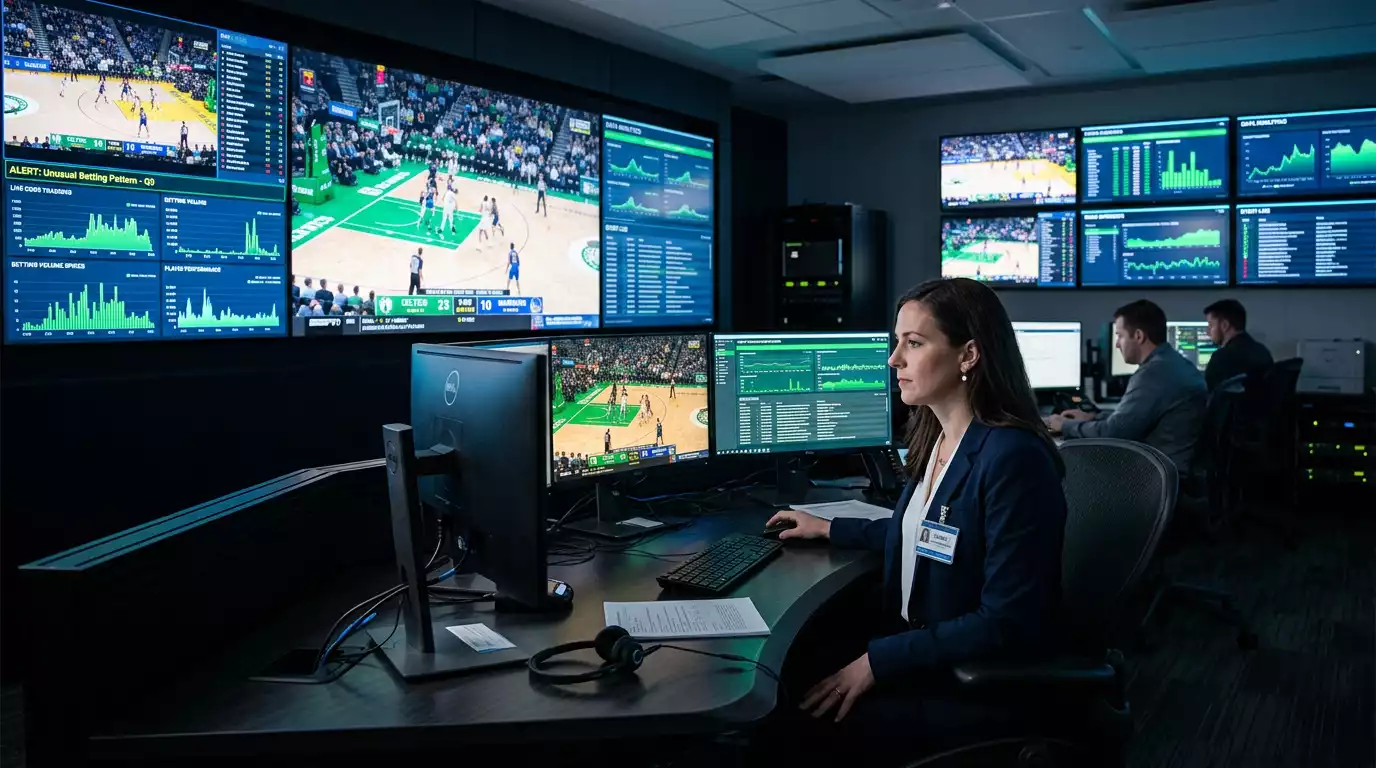
Monitoring in-play betting is exponentially harder than monitoring pre-match markets. The volume is higher, the time for analysis is shorter, and the baseline of “normal” is fuzzier. What constitutes suspicious live betting when everything is moving constantly?
Traditional integrity monitoring relies on identifying unusual betting patterns before events occur. Sharp money arrives, lines move, the activity is logged and analysed. In-play markets don’t offer the same window. By the time suspicious activity is identified, the moment has passed and the bets have settled.
Post-game analysis can reveal patterns that real-time monitoring misses. If certain accounts consistently win on in-play bets at specific moments, that consistency might indicate advance knowledge. But building the statistical case requires accumulating evidence across many games, allowing manipulation to continue during the data-gathering period.
The Donaghy case demonstrated how pre-match betting patterns could reveal referee corruption. Whether similar analysis would work for in-play manipulation is uncertain. The noise-to-signal ratio is higher, the correlation windows are shorter, and the number of potential manipulation points per game is vastly larger.
Global Coordination Challenges
In-play betting on NBA games occurs globally, often through platforms in different jurisdictions with varying regulatory requirements. A game in Los Angeles might see real-time betting through European operators, Asian platforms, and offshore sites simultaneously. Coordinating monitoring across these platforms presents substantial challenges.
IBIA members account for over $300 billion in annual betting turnover and share suspicious activity reports across jurisdictions. But significant in-play volume flows through non-member operators or unregulated platforms that don’t participate in monitoring networks. Manipulation could occur through channels that legitimate monitoring never sees.
Time zones complicate coordination. When an NBA game tips off at 7 PM Pacific, it’s 3 AM in London and morning in Asia. Real-time coordination across these time differences requires staffing and infrastructure that not all monitoring organisations maintain around the clock.
The global nature of in-play betting means that manipulation discovered in one jurisdiction might involve betting placed in another and coordinated from a third. Untangling these threads requires international cooperation that moves slower than the markets themselves.
Practical Implications for UK Bettors
UK punters betting live NBA markets should understand both the appeal and the risks. In-play betting offers engagement that pre-match can’t match. Watching a game while actively betting on its developments creates entertainment value beyond pure gambling.
But the integrity risks are real. You’re betting into markets that update based on information you might receive with delay. You’re competing against algorithms designed to extract value from recreational bettors. And you’re exposed to potential manipulation that occurs faster than detection systems can identify.
Practical risk management for in-play betting starts with stake discipline. The rapid feedback loops of live betting encourage chasing and overcommitment. Setting session limits before engaging helps prevent the emotional spirals that live markets can trigger.
Market selection also matters. In-play spreads and totals based on game outcomes are harder to manipulate than specific player actions. Avoiding live props on individual players reduces exposure to the kind of single-point corruption that prop markets face in pre-match betting.
The fundamental reality is that in-play betting optimises for engagement and sportsbook margins rather than bettor value or integrity protection. Understanding this dynamic helps calibrate expectations and manage risk appropriately.
The Future of Live NBA Betting
In-play betting will continue growing regardless of integrity concerns. The engagement value for bettors and the margin advantages for sportsbooks create powerful incentives that override caution about manipulation risk. The question isn’t whether live betting expands but how monitoring adapts to address the vulnerabilities it creates.
Technology improvements may help. Real-time analysis of betting patterns could flag suspicious activity within seconds rather than hours. Machine learning algorithms trained on historical manipulation might identify concerning patterns that human analysts would miss. The arms race between detection and manipulation continues.
Regulatory attention is also increasing. The NBA’s advocacy for league control over bet types explicitly mentions real-time betting as an area of concern. If leagues gain authority to restrict particularly vulnerable in-play markets, some options currently available might disappear.
For UK bettors, the trajectory suggests enjoying in-play betting while it exists in current form but preparing for potential changes. The products generating the most integrity concern are often the most engaging. Balancing that entertainment value against both financial and ethical risks requires ongoing judgment calls that each bettor must make for themselves.
Why does in-play betting create additional manipulation opportunities?
In-play betting allows manipulators to target specific moments rather than game outcomes. A corrupt participant only needs to influence particular plays that create predictable market movements, making detection harder because the manipulation blends with normal game variance.
How does detection work for live NBA betting?
Real-time detection is extremely difficult due to volume, speed, and unclear baselines for suspicious activity. Post-game analysis can identify patterns across multiple games, but this allows manipulation to continue during evidence gathering.
What percentage of sports betting will be in-play by 2028?
Industry projections suggest in-play betting will account for 65% of all sports wagers by 2028. For NBA games specifically, the constant scoring and frequent timeouts have driven even faster adoption of live betting markets.
Prepared by the nba ref Betting on Games editorial staff.