The Pedowitz Report: 116 Pages That Changed NBA Referee Oversight
 Available in US
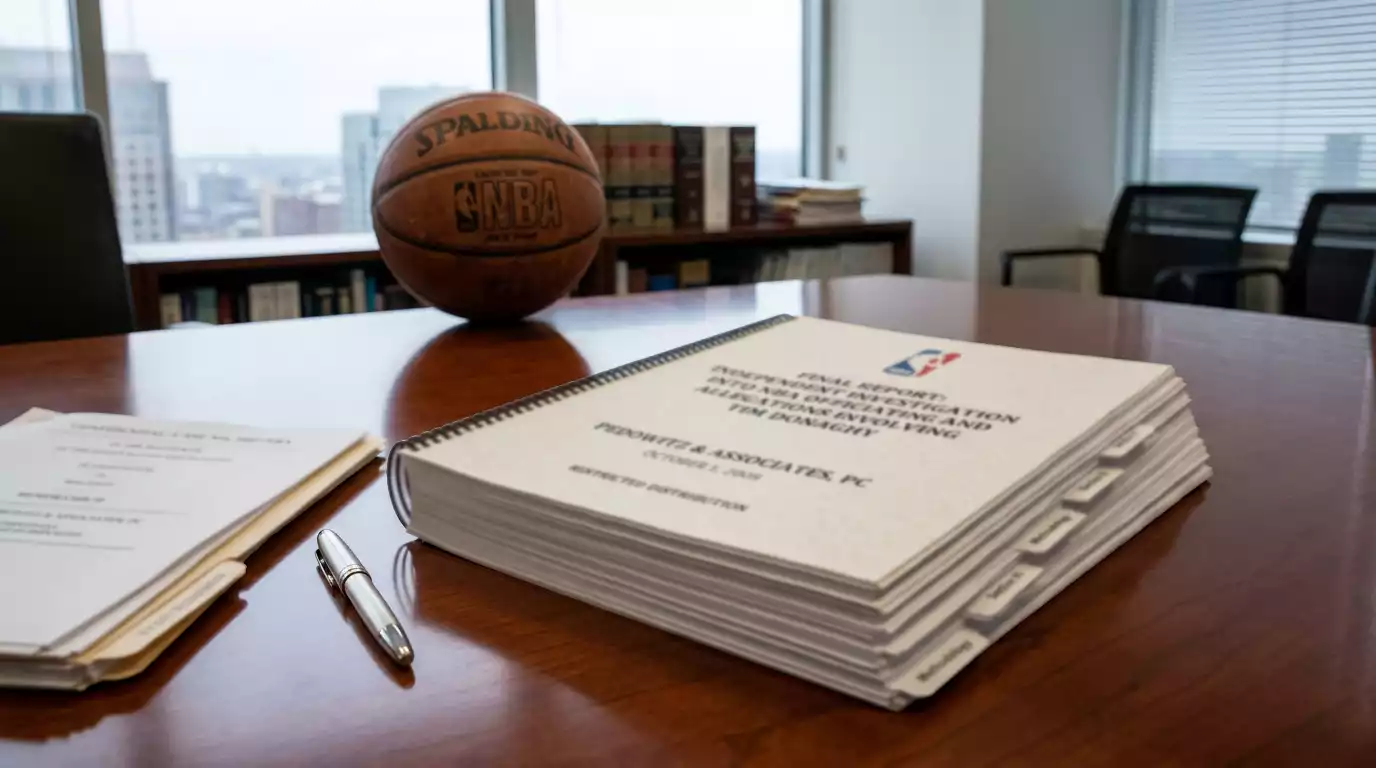
When I first obtained a copy of the Pedowitz Report in late 2008, I expected a whitewash. The NBA had commissioned it, after all, and leagues rarely pay for investigations that make them look terrible. What I found instead was 116 pages of uncomfortable truths that the league has spent nearly two decades trying to implement, ignore, and occasionally pretend doesn’t exist.
Lawrence Pedowitz, a former federal prosecutor and white-collar crime specialist, was hired to conduct an independent investigation after Tim Donaghy’s arrest exposed catastrophic failures in how the NBA monitored its officials. The report he delivered wasn’t just about one crooked referee. It was a systematic examination of how the league had created conditions that made corruption almost inevitable.
For anyone who bets on NBA games, understanding what Pedowitz found is essential. His investigation revealed vulnerabilities that still exist today, reforms that were implemented half-heartedly, and warnings that went unheeded until the 2025 scandal forced the league to confront them again.
Scope of the Investigation
A year of my life once disappeared into an investigation that spanned six months and produced two filing cabinets of interview transcripts. The Pedowitz investigation dwarfed anything I’d undertaken. His team conducted approximately 200 interviews, though the cooperation they received was uneven at best. Only 14 of 30 NBA teams agreed to participate, a detail that tells you something about how seriously franchises take integrity issues when the scrutiny might land on them.
The investigation covered everything from referee hiring practices to monitoring systems, from gambling policies to relationships between officials and team personnel. Pedowitz reviewed betting patterns on games Donaghy officiated, examined the NBA’s existing oversight mechanisms, and interviewed current and former referees about the culture within the officiating corps.
What struck me most when reading the methodology section was the resistance Pedowitz encountered. Teams that refused to cooperate. Officials who provided minimal information. A league bureaucracy that seemed more interested in limiting the investigation’s reach than in uncovering the full extent of any problems. Despite these obstacles, Pedowitz produced findings that should have transformed how the NBA approaches integrity.
Key Findings: The Numbers That Should Have Alarmed Everyone
The headline finding was explosive enough that I remember exactly where I was when I read it: 52 of 57 NBA referees had engaged in some form of gambling. Not on NBA games, the report was careful to clarify, but gambling nonetheless. Casinos, card games, sports other than basketball. The officiating corps was saturated with gambling activity.
Lawrence Pedowitz wrote in his conclusions that “because the potential for referee bias remains a threat to the integrity of the game, the League can do more.” That understated phrasing was typical of the report’s tone. The findings were damning, but the language was measured, almost diplomatic.
Beyond the gambling prevalence, the report documented inadequate background checks for referee candidates, insufficient monitoring of officials’ personal finances and associations, and a culture that discouraged reporting concerns about colleagues. Referees essentially operated in a bubble, subject to evaluation of their on-court performance but with almost no scrutiny of their off-court activities.
The report also identified the timing of referee assignment announcements as a significant vulnerability. Before Donaghy, the NBA announced which referees would work each game approximately 90 minutes before tip-off. That window gave anyone with advance knowledge substantial time to place bets or share information with gambling interests. The value of knowing which referee would call a particular game was worth tens of thousands of pounds to the right bettor.
Recommendations for Reform
Pedowitz didn’t just catalogue problems. He proposed solutions, dozens of them, ranging from simple procedural changes to fundamental restructuring of how the league approached integrity.
The recommendations addressed referee screening with proposals for enhanced background investigations before hiring and periodic re-screening throughout careers. Financial monitoring was another major focus: tracking referee finances to identify sudden wealth, unusual expenditure patterns, or unexplained debts that might signal vulnerability to corruption.
Training programmes would educate officials about manipulation tactics, warning signs, and reporting procedures. Anonymous reporting mechanisms would allow referees to raise concerns about colleagues without fear of retaliation. The timing of assignment announcements would shift to reduce the value of advance information.
Perhaps most significantly, Pedowitz recommended establishing a dedicated integrity unit with real investigative authority, not just an administrative function but an active monitoring operation that could detect problems before they became scandals.
What the NBA Actually Implemented
Here’s where the story becomes frustrating. The NBA adopted some Pedowitz recommendations immediately. The most visible change was to referee assignment timing. The league now announces officiating assignments on the morning of games rather than 90 minutes before tip-off. This simple procedural shift dramatically reduced the actionable value of knowing which referees would work which games.
Background checks were enhanced, though the depth and thoroughness of those checks remains somewhat opaque to outside observers. The NBA created dedicated integrity personnel and established relationships with monitoring organisations that track betting pattern anomalies.
But other recommendations were implemented partially or not at all. The comprehensive financial monitoring Pedowitz envisioned would require ongoing surveillance of referee accounts, which raises privacy concerns and proved difficult to implement systematically. The culture changes within the officiating corps are hard to measure from outside.
Most tellingly, the 2025 scandal revealed that the vulnerabilities Pedowitz identified in 2008 still existed in different forms. Insider information about player injuries, team strategies, and other non-public data retained enormous value for gamblers. The mechanisms Donaghy exploited had been partially addressed, but new attack vectors had emerged that the Pedowitz reforms didn’t anticipate.
The Report’s Long-Term Impact on League Integrity
I sometimes describe the Pedowitz Report as the best document about sports integrity that almost nobody has read. It sits in a strange position: too detailed for casual consumption, too damning for the league to publicise, too dated to address current challenges, yet too prescient to dismiss.
The report established a baseline understanding of referee vulnerability that remains relevant. Pedowitz’s analysis of how corruption operates in professional sports hasn’t been superseded by any subsequent work. His framework for thinking about integrity risks applies beyond basketball to any sport where officials exercise significant discretion over outcomes.
For UK bettors, the Pedowitz Report offers a realistic assessment of what leagues can and cannot control. Even after implementing reforms, the NBA couldn’t eliminate insider information value or prevent individuals with access to non-public data from exploiting that advantage. The 2025 arrests demonstrated that integrity is an ongoing challenge, not a problem that gets solved and stays solved.
What Pedowitz understood, and what the report makes clear on careful reading, is that sports integrity is a process rather than an endpoint. The reforms he recommended were designed to make corruption harder and detection more likely, not to eliminate risk entirely. That framework remains the most honest assessment of what leagues can realistically achieve, and it should inform how bettors evaluate the integrity of any market they enter.
What is the Pedowitz Report and what did it recommend?
The Pedowitz Report was a 116-page independent investigation commissioned by the NBA after the Tim Donaghy scandal. It recommended enhanced background checks, financial monitoring of referees, changed timing for officiating assignments, anonymous reporting mechanisms, and establishment of a dedicated integrity unit.
How many NBA referees admitted to gambling in the Pedowitz investigation?
The investigation found that 52 of 57 NBA referees had engaged in some form of gambling, though not on NBA games. This included casino gambling, card games, and betting on other sports.
Which Pedowitz recommendations did the NBA actually implement?
The NBA implemented several recommendations including changing referee assignment announcements to game-day mornings, enhanced background checks, and establishing integrity monitoring partnerships. However, other recommendations like comprehensive financial surveillance were implemented partially or not at all.
Prepared by the nba ref Betting on Games editorial staff.